
Braino!
Version: 5.14.0 | Published by iamankushpandit
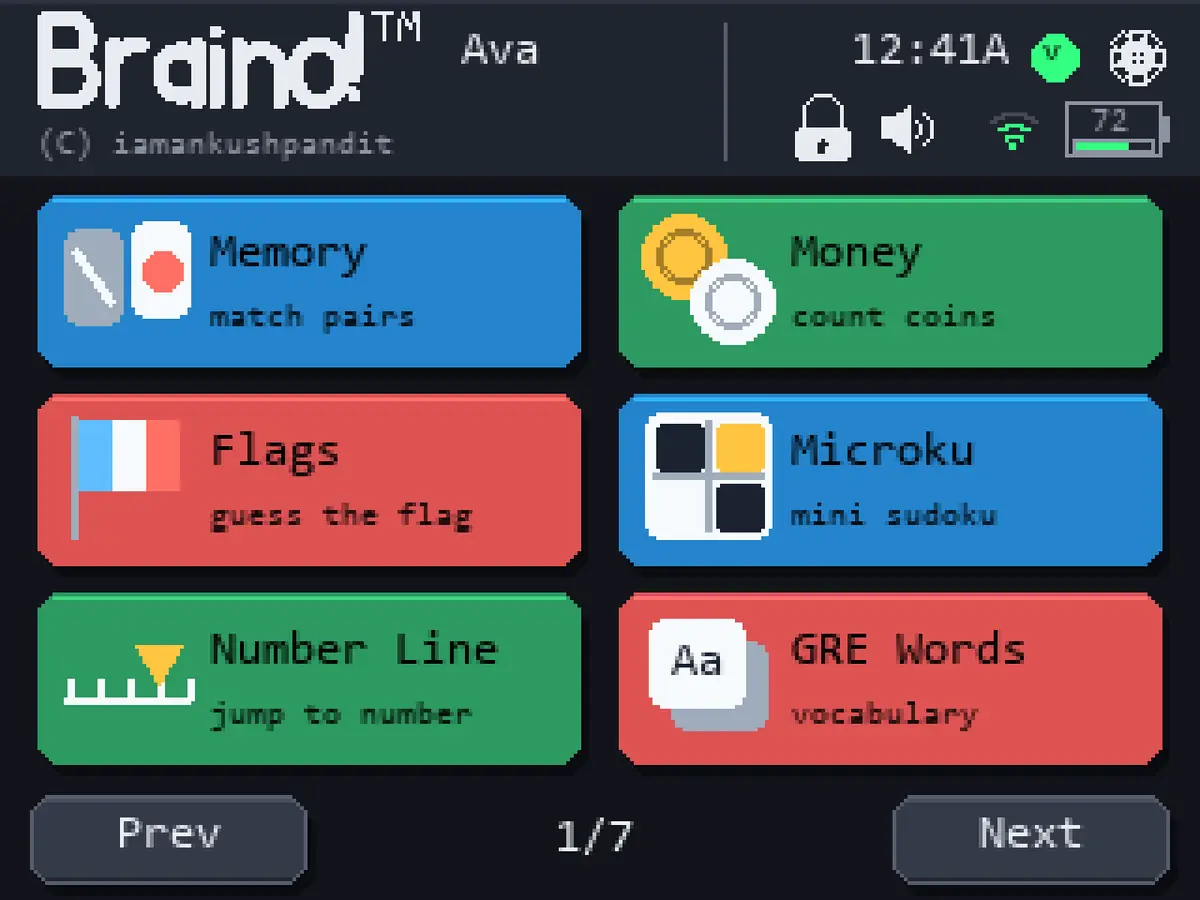
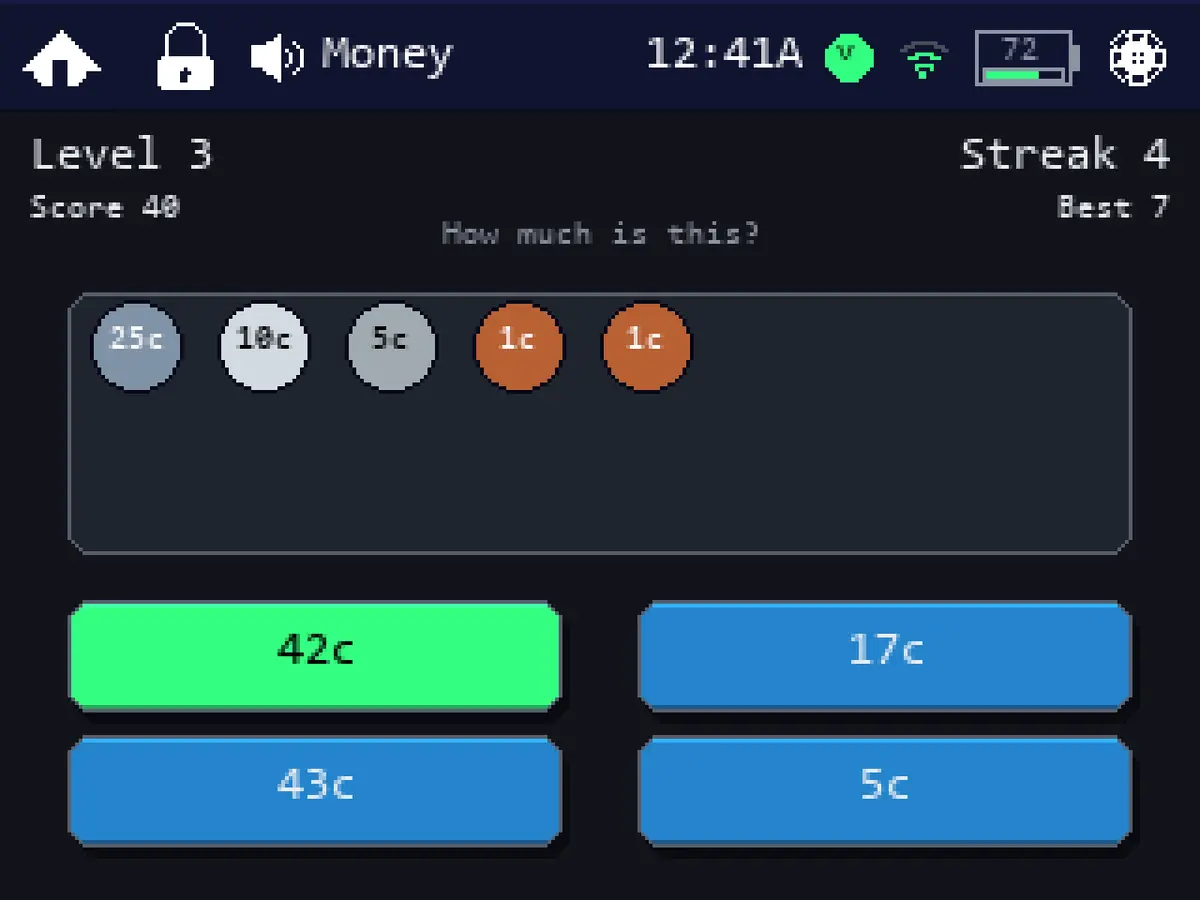
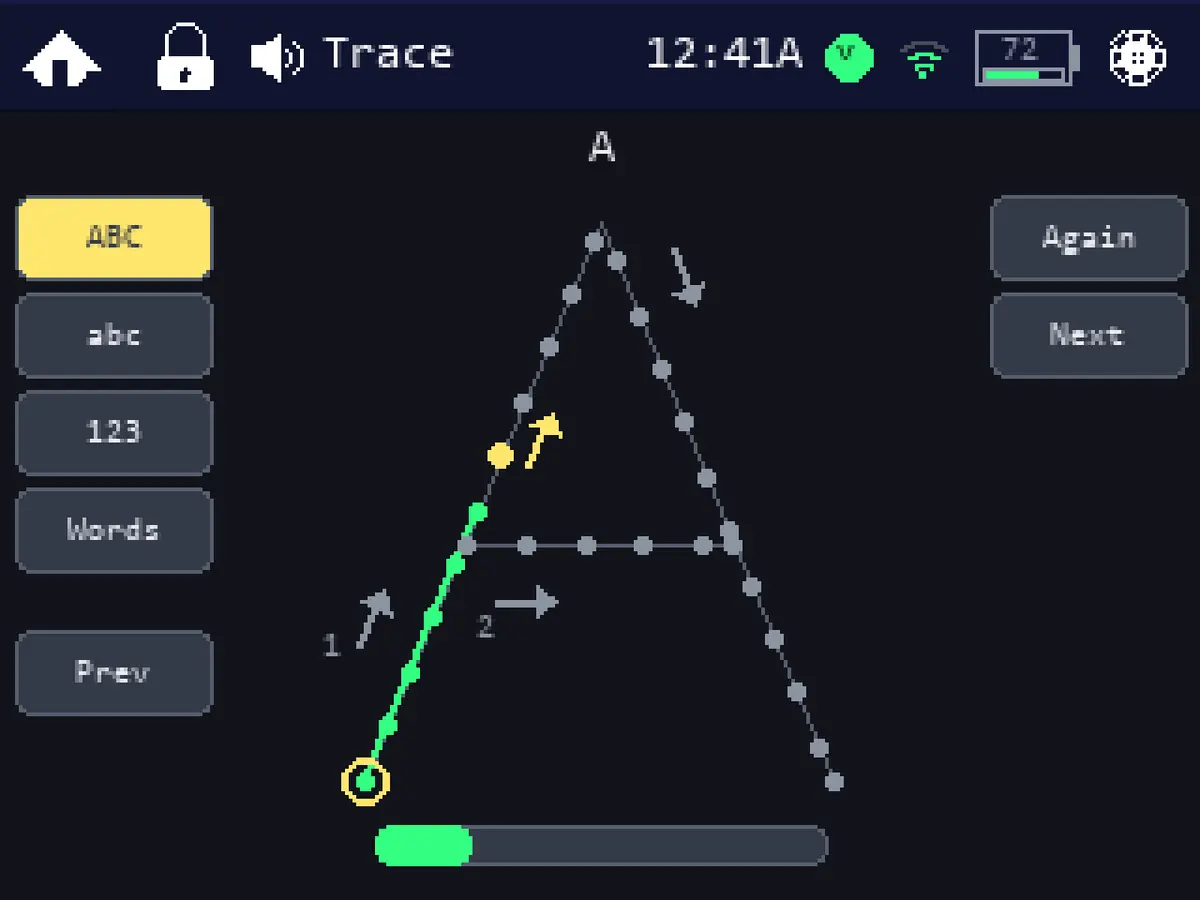
Braino! — 40 learning games that grow with each player
Braino! turns your Core into a learning console. There are 40 games: maths, reading, letter tracing, flags and maps, science, memory and logic, plus Chess, Go, Backgammon, Ludo and Sea Battle. There are no accounts or ads, and nothing goes online that you didn't switch on.
Games that grow with each player
- 27 of the games are courses. Each player has their own level in each course. Right answers move them up and misses bring them down, so the questions stay a little ahead of each player.
- Every item at a level comes up once before any repeats, and a missed question comes back a few questions later.
- If you leave a game in the middle, it waits for you. When you open it again, Braino! asks whether to carry on or start a new game.
Players and an admin PIN
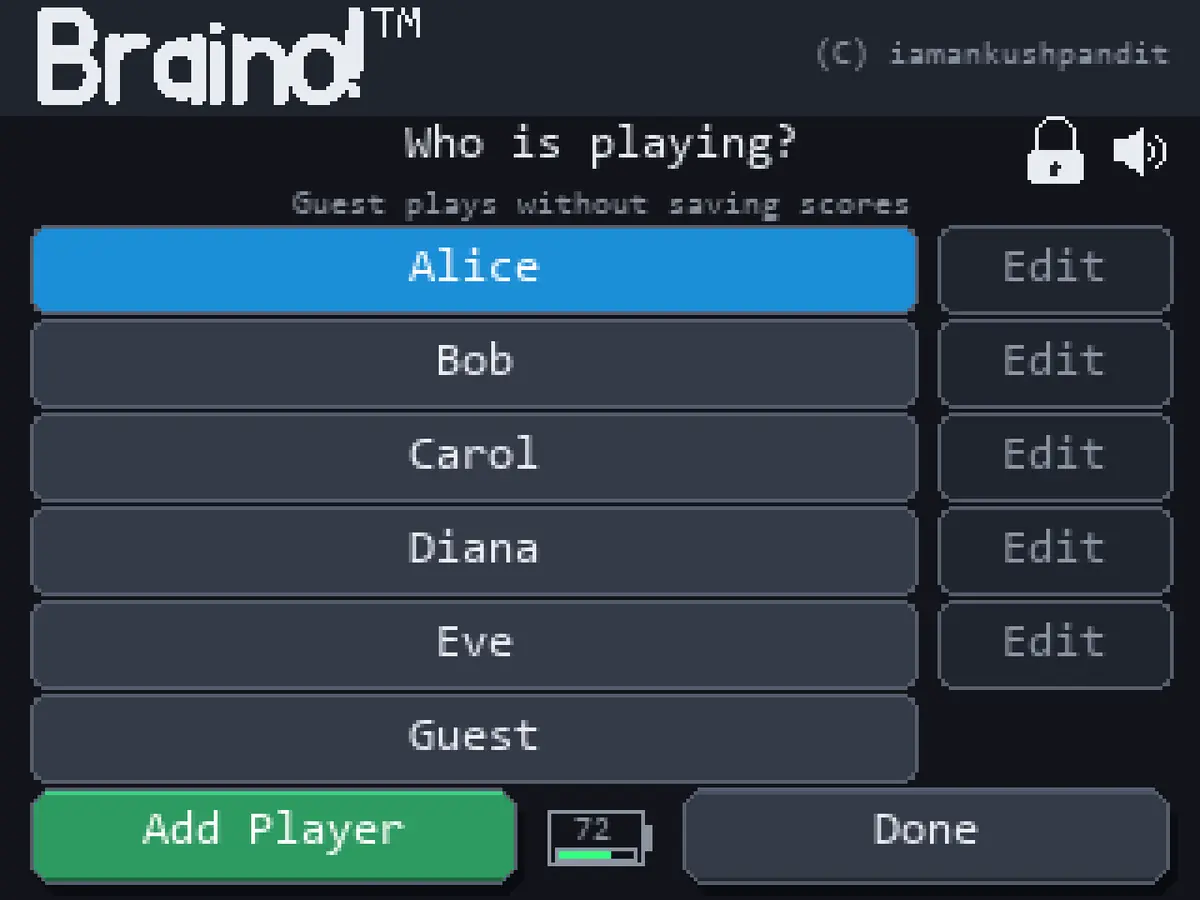
- Up to five players plus a Guest. Each player has their own scores, levels and list of games.
- An admin PIN protects settings, removing a player, and choosing which games each player sees. Braino! asks for the PIN every time.
Play across consoles
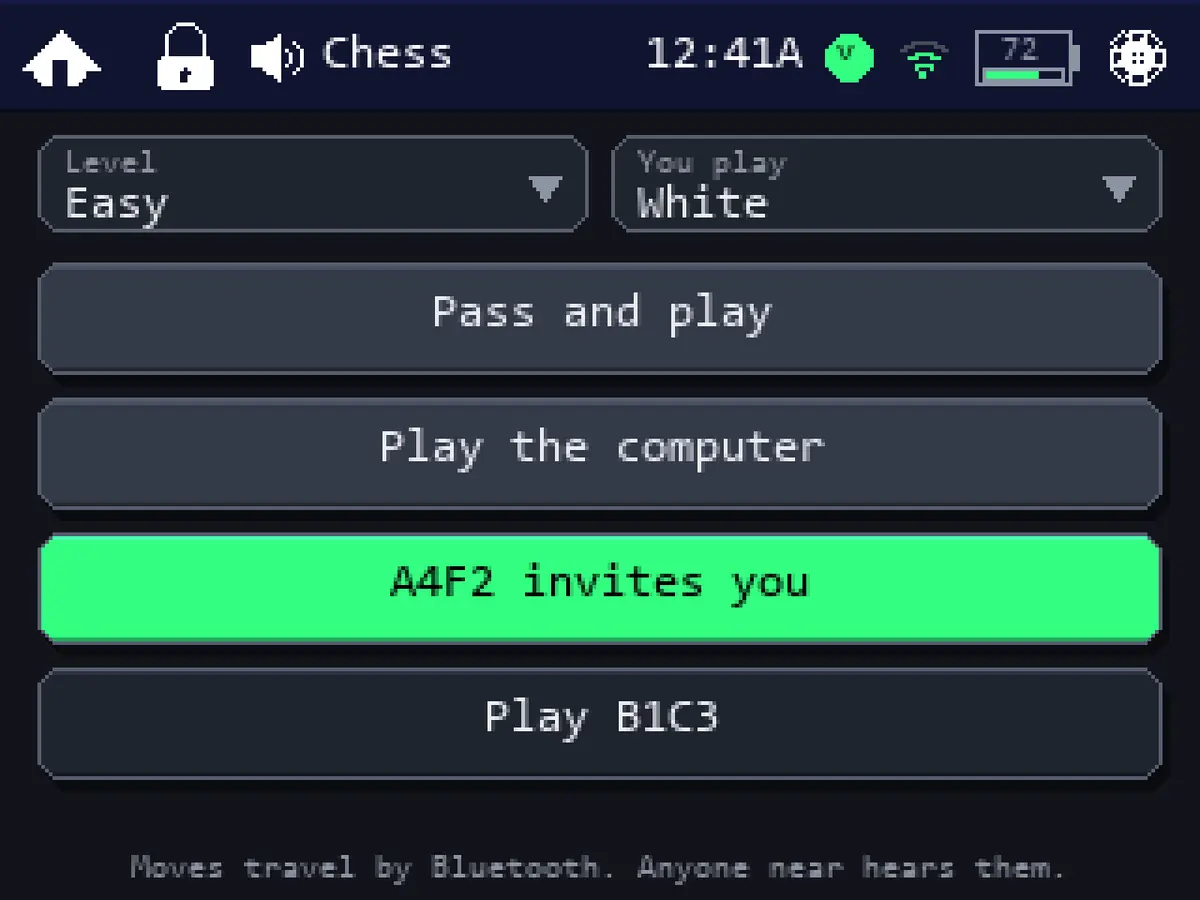
- Two Braino! consoles can play Chess, Go, Backgammon or Sea Battle against each other. Up to four can play Ludo.
- Moves travel by a Bluetooth beacon that nothing can connect to. It is off until you switch it on. Anyone nearby can hear the moves, and only the consoles playing act on them.
Modules it uses
- Core (required): the touch screen, Wi-Fi for the clock, and Bluetooth for play across consoles. Everything can be reached by touch.
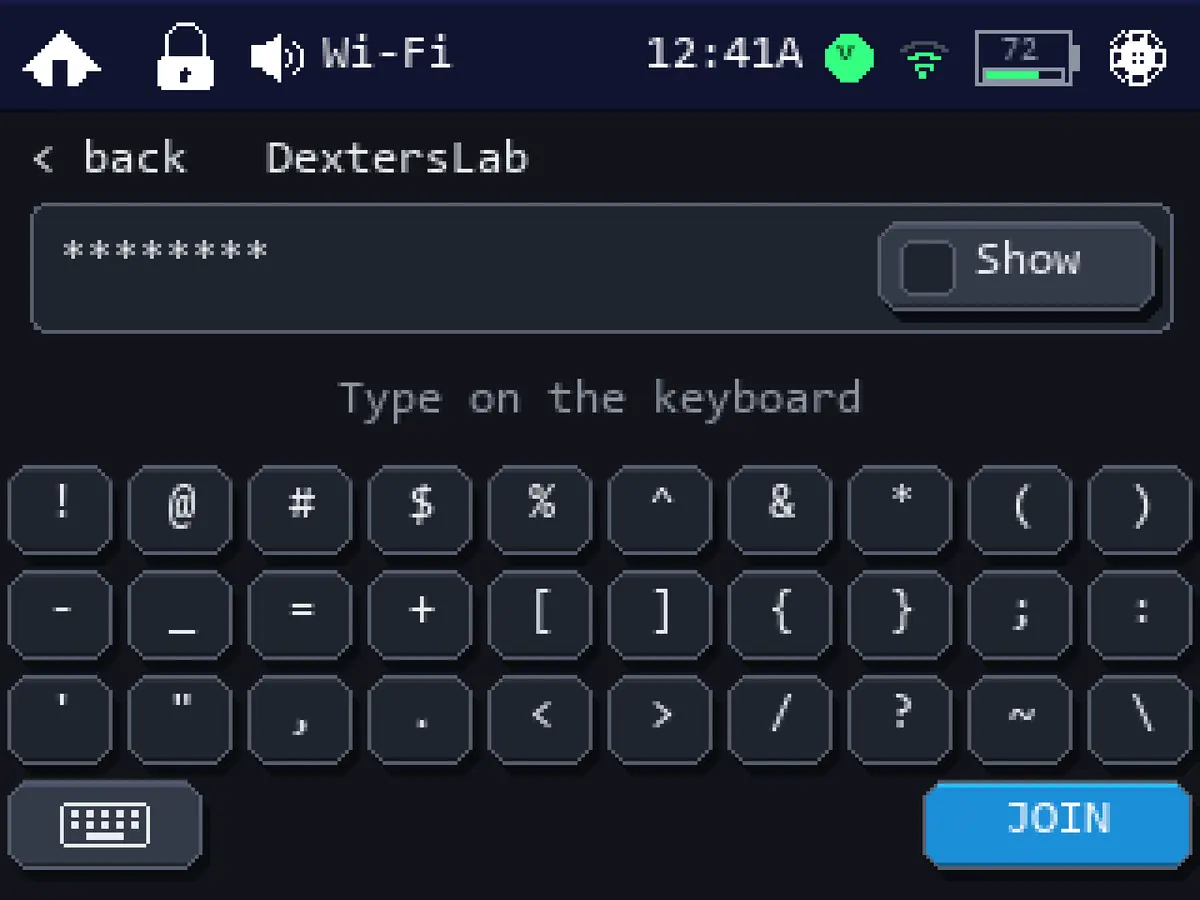
- Keyboard: type names, PINs and the Wi-Fi password. The on-screen keypad stays out of the way and comes back with one tap.
- Gamepad: the D-pad moves a selector to the buttons on every screen and across the board games' squares. In quizzes with four answers, the four round keys answer.
- Media I/O: sound and the microSD slot.
- Power module: the battery level and low-battery warnings.
Braino! checks which modules are attached each time it starts and uses only what it finds. If a LoRa/GPS or FM/AM module is attached, Braino! leaves its lines alone and starts without sound or the SD card. About → Modules lists what it found.
Privacy
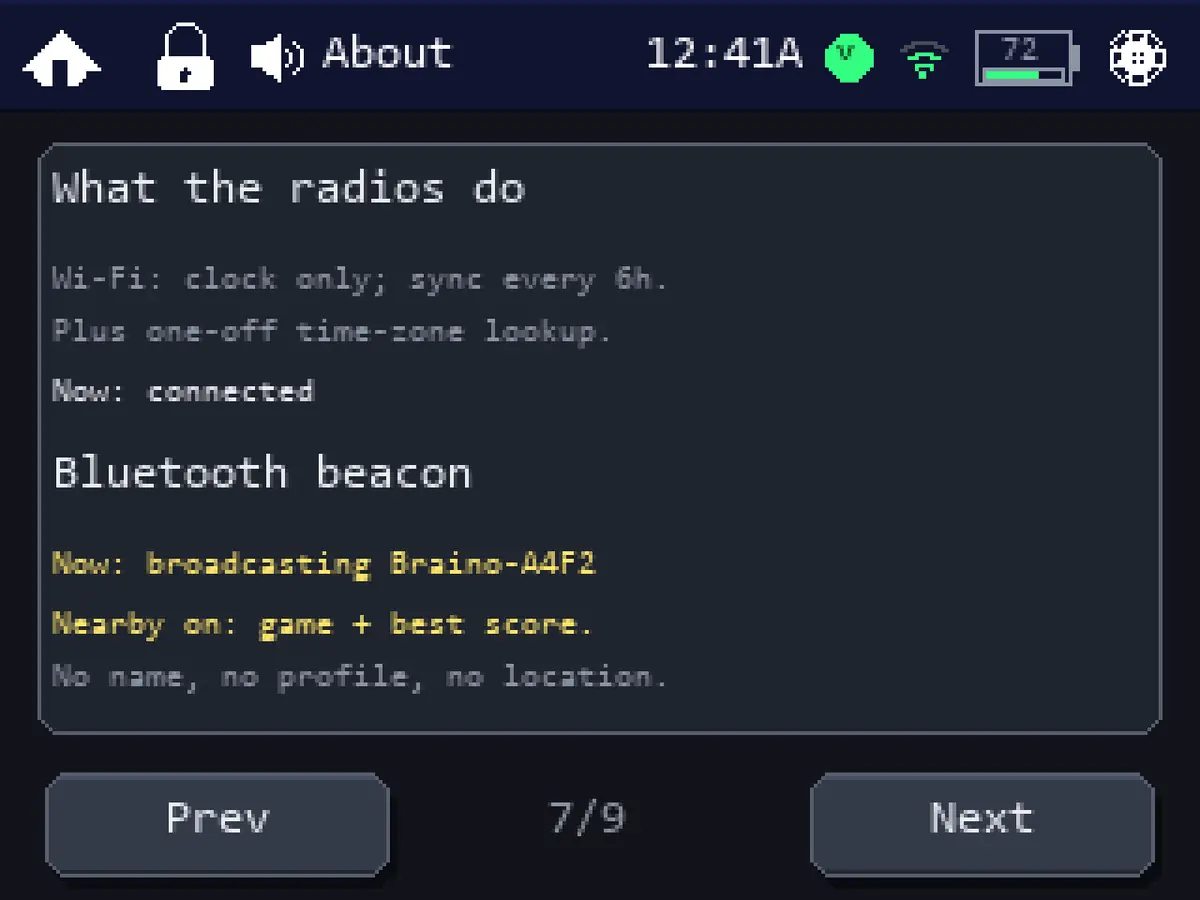
Braino! has no accounts and no telemetry, and it never sends a player's name, profile, score or typing. Exactly four things ever leave the console:
- a time query, to set the clock
- one lookup to guess your time zone, on first connect
- the Bluetooth beacon, only if you switch it on
- a once-a-day check for a newer version, which says nothing about your console
The first, second and fourth happen only after you give it a Wi-Fi network. Scores and players stay on the console.
Open source
Braino! is free software under GPL-3.0-or-later. The full source, the build and the hardware notes are on GitHub.
Release Notes
- 40 games, 27 of them courses with a level kept for each player.
- The Keyboard types into every text field: names, PINs and the Wi-Fi password. The on-screen keypad steps aside while it types and comes back with one tap. The Wi-Fi password keeps the symbols the keyboard does not have on screen.
- The Gamepad's D-pad moves a selector to every button and across the board games. In four-answer quizzes, the round keys answer, and each answer shows its key's symbol.
- The power key's short press locks the console and puts the screen to sleep. While the screen sleeps, the console's own lights go out.
- Sound and the microSD slot come from Media I/O. If a LoRa/GPS or FM/AM module is attached, Braino! leaves it alone and starts without them.
- The battery level comes from the Power module.
- Play across consoles: Chess, Go, Backgammon and Sea Battle with two consoles, Ludo with up to four, over an opt-in Bluetooth beacon.